


Temporary Fencing in Southend-on-Sea (SS) – Emergency & Short-Term Site Security
When a property boundary is suddenly compromised, you need a fast, practical way to secure the area and make it safe—especially if there’s exposed glass, unstable debris, or an open frontage that can’t be locked. Our temporary fencing in Southend-on-Sea helps homeowners, landlords, shop owners and site managers across the SS postcode area protect people, reduce risk, and control access after an incident.
If you need urgent help, we prioritise emergency call-outs and will give you a realistic ETA on the phone.
Need emergency temporary fencing now? Call 01702 967 571
Prefer email? [email protected]
When temporary fencing is the right solution (and when it isn’t)
Temporary fencing is ideal when the perimeter needs to be controlled—rather than just a single opening like a window or door. Common reasons people in Southend-on-Sea request emergency fencing include:
- A vehicle impact has taken out a front wall, railing or boundary, leaving a public hazard
- Storm damage has brought down panels or gates
- A shopfront has been smashed and the surrounding area needs to be kept clear while glazing is arranged
- A fire-damaged or flood-affected building needs an exclusion zone
- A vacant or void property has become accessible and you need to deter trespass
- Ongoing works require a fast, temporary boundary without permanent installation
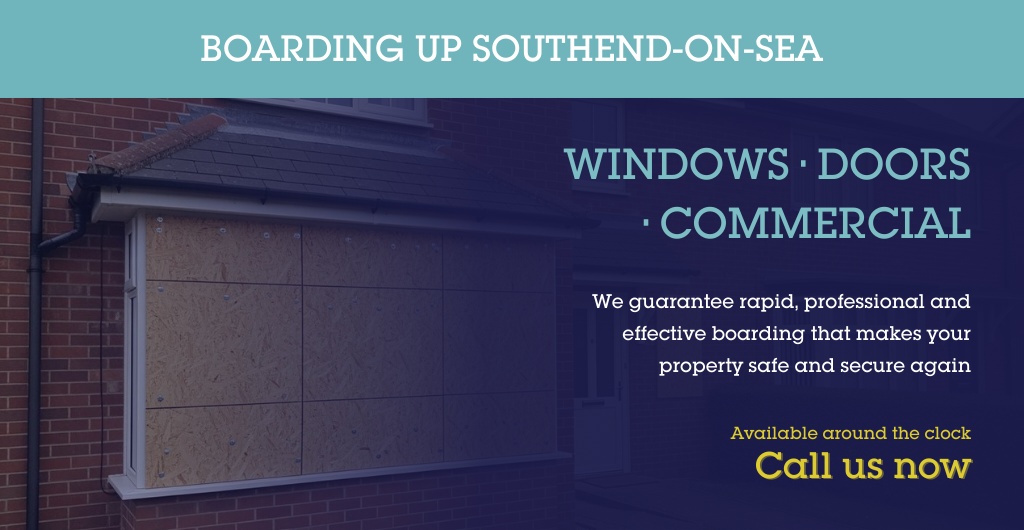
Temporary fencing can be used on its own, or combined with boarding. If you also need a board up broken window or a board up door after a break-in, we may recommend pairing fencing with emergency boarding up or specific measures like window boarding in Southend-on-Sea and door boarding.
When it might not be enough:
If there’s an accessible door opening and the property will be unattended, fencing alone may not prevent entry. In those cases we’ll talk you through stronger options such as a temporary steel door (where suitable) or additional boarding/security measures—without pushing you into anything unnecessary.
Emergency use-cases we see in SS postcodes
Temporary fencing is often about public safety as much as security. Typical urgent scenarios include:
- Accident/impact damage: a car has hit a frontage or boundary, leaving loose bricks, exposed rebar, or a dangerous opening. We can make safe the area quickly while you arrange repairs. (See also: accident damage support.)
- After burglary or attempted break-in: the gate is forced or the perimeter is breached and you need to secure property access routes, not just the point of entry. (See: burglary repairs.)
- Storm damage: fencing panels blown down, garden walls partially collapsed, or shared access routes now open. (See: storm damage support.)
- Fire or flood scenes: the building may be unsafe to enter, but you still need to prevent people getting too close. We can install fencing to create an exclusion zone while other professionals handle remediation. (See: fire damage securing and flood damage securing.)
In these moments, people are understandably stressed. Our job is to turn an unsafe, open situation into a controlled site with clear access boundaries and reduced liability.
What “temporary fencing” includes (materials & system options)
The right fencing depends on the ground type, the risk level, and how long you need it in place. We’ll recommend a setup that balances speed, stability, and access requirements.
Heras-style temporary fence panels (common for emergency call-outs)
Most emergency installations use galvanised mesh fence panels mounted on heavy-duty feet/blocks.
Why this works well:
- Fast to deploy for urgent situations
- Creates a clear physical and visual barrier
- Suitable for commercial sites, residential boundaries, and incident scenes
- Can be extended or reconfigured if the site changes
Stabilisation and anti-movement measures
A fence is only useful if it stays upright and resists tampering. Depending on the site, we may use:
- Couplers/clamps to connect panels securely
- Stabilisers/braces where additional rigidity is needed
- Gate/access solutions (where practical) to manage authorised entry
- Careful placement to reduce lift points and improve stability
If the location is exposed to wind, foot traffic, or repeated interference, we’ll explain what extra stabilisation is sensible. We won’t pretend any temporary system is invulnerable—but we will be honest about what’s achievable on your site.
Clear boundaries while repairs are arranged
Temporary fencing is frequently used as a short-term measure while you organise:
- Glazing replacement after a smashed window
- Builders to rebuild a wall or reinstate railings
- Structural checks after impact
- Insurance visits/assessments
Where you also need temporary boarding to close an opening, we can coordinate fencing around the board-up so the site remains controlled while the building is weatherproofed and secured.
How we install temporary fencing (what to expect)
Every call-out is slightly different, but the process is straightforward and designed for speed and clarity.
-
Initial questions on the phone
We’ll ask what happened, whether anyone is at risk, and what needs blocking off (frontage, side access, rear alley, car park edge, etc.). If it’s urgent or out of hours, we’ll prioritise the job and give a realistic ETA. -
On-site assessment
We check ground conditions, hazards, access routes, and whether there are any safe fixing or stabilisation considerations. If the area is unsafe to enter, we’ll work from a safe perimeter. -
Temporary fencing installation
Panels are positioned to create a practical barrier and connected to form a continuous line. Where needed, we add stabilisers and plan access points. -
Make safe, document, and handover
We can provide:- Time-stamped photos of the completed fence line
- An itemised invoice and work statement for your records/insurer
This is often useful when fencing is installed after an incident and you need to show you acted quickly to reduce risk.
If we spot something that affects your security—like a compromised door, exposed glazing, or an accessible roofline—we’ll point it out and explain options. If the frame is too damaged for non-destructive measures, we’ll tell you before proceeding.
Temporary fencing vs boarding up: which should you choose?
People often call asking for “boarding up” when what they really need is perimeter control. Here’s a practical way to decide:
Temporary fencing is best when you need to:
- Keep the public away from hazards (glass, debris, unstable structures)
- Control access to a site or shared area
- Secure a damaged boundary, open land, or a frontage during repairs
- Create an exclusion zone after fire/flood/impact
Boarding up is best when you need to:
- Close an opening in a building (window, door, shopfront, rooflight)
- Reduce weather exposure and prevent entry through the opening
If you need both, we can combine fencing with:
- shopfront boarding when commercial glazing is smashed and you need the area controlled
- roof boarding if there’s an overhead opening and the site needs to be restricted below
For urgent situations, start with the fastest way to reduce risk. We’ll guide you from there.
Common questions we’ll ask you (to get it right first time)
When you call, it helps if you can tell us:
- What’s happened (burglary, storm, vehicle impact, fire, etc.)
- Whether police, fire service, or building control are involved (if applicable)
- Approximate length of fencing needed (even a rough estimate is useful)
- Whether the area is flat ground, gravel, uneven surfaces, or restricted access
- If you need a specific access point for authorised entry (e.g., staff, contractors)
If you’re not sure—don’t worry. Many customers are calling in a panic. We can work with basic information and confirm details on arrival.
Insurance and documentation (what we can provide)
We’re not loss adjusters or legal advisers, but we regularly support customers who need paperwork for claims after burglary, vandalism, storm damage or impact incidents.
We can provide documentation insurers typically ask for, such as:
- Itemised invoice
- Work description (what was installed and why)
- Time-stamped photos for evidence the site was secured
More guidance is on our insurance claims help page.
Coverage: temporary fencing across Southend-on-Sea and SS postcodes
We provide temporary fencing across Southend-on-Sea and the wider SS area (SS0–SS22). That includes support for residential, commercial, and vacant properties—whether it’s a small garden boundary issue or a larger perimeter around a damaged frontage.
If you’re not sure whether you’re in range, call and ask—we’ll be upfront.
For urgent needs, you can also start on our emergency boarding up page and we’ll direct you to the right solution.
FAQs – Temporary fencing in Southend-on-Sea
Do you offer emergency temporary fencing out of hours?
Yes. If you need help out of hours to make safe a site after an incident, call us and we’ll tell you what’s possible and give a realistic ETA based on current workload.
Can temporary fencing help after a smashed shopfront window?
Often, yes. If you’ve had a smashed window or damaged frontage, fencing can keep people away from hazards while we arrange a shopfront boarded up solution or while you organise glazing. In many cases we’ll recommend combining fencing with shopfront boarding for better security.
Is temporary fencing secure enough for a vacant property?
It can deter access and clearly define a boundary, but it’s not the same as securing the building itself. For voids, we’ll usually discuss layered protection—fencing plus measures to close openings and prevent entry. See vacant property securing.
Do I need temporary fencing or should I board up the door/window?
If the main issue is an opening (window/door), boarding is usually the priority. If the issue is an unsafe perimeter or public risk area, fencing is often the quickest first step. If you’re unsure, call—we’ll help you choose between window boarding, door boarding, and fencing.
Can you install fencing on uneven ground?
Often, yes, but it depends on how uneven and what’s beneath (mud, gravel, slopes, broken paving). We’ll assess on arrival and explain any limitations. If a section can’t be safely stabilised, we’ll propose an alternative layout.
How long can temporary fencing stay up?
Temporary systems are designed for short-to-medium periods, but the practical duration depends on exposure, footfall, and site conditions. If you need longer-term protection, we can discuss more robust security options as part of a broader “secure property” plan.
Will you provide photos and an invoice for my insurer?
Yes. We can provide time-stamped photos and an itemised invoice/work statement—useful for insurance claims and property management records. See insurance claims guidance.
Ready to secure your site?
If you need temporary fencing in Southend-on-Sea—whether it’s to secure property, control access after damage, or make safe an area quickly—contact us now.
Need help now? Call 01702 967 571 for immediate assistance.
Or email us and we’ll come back to you as soon as possible.
