


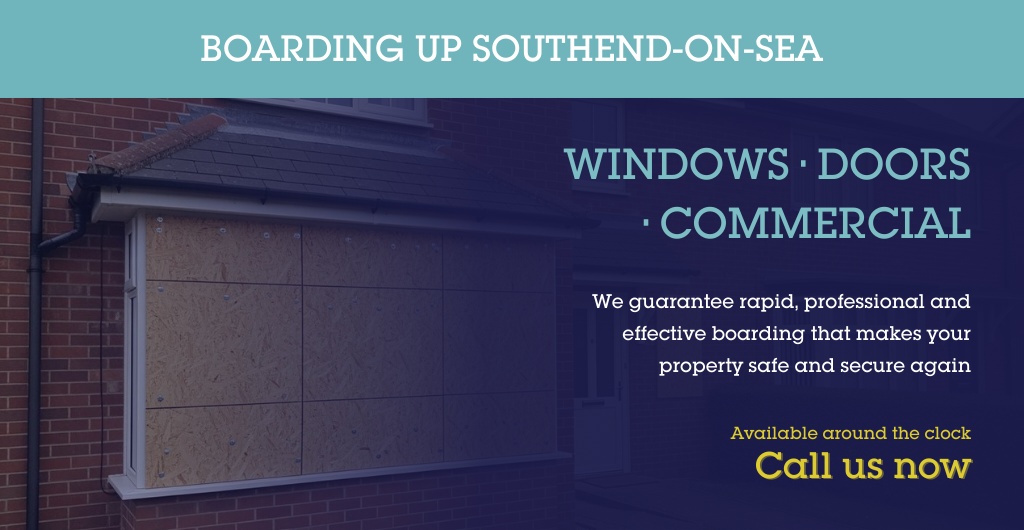
Residential Boarding Up in Southend-on-Sea (SS0–SS22)
When something happens to your home—whether it’s a smashed window, a forced door, or storm damage—your priority is simple: secure the property quickly and safely. Our team provides residential boarding up in Southend-on-Sea and across the SS postcode area, helping homeowners, tenants, landlords and letting agents protect houses, flats and maisonettes after an incident.
If you need urgent help, we can arrange emergency boarding up day or night (availability varies with workload, but we prioritise urgent calls and will give you a realistic ETA on the phone).
Need help now? Call 01702 967 571
Or email: [email protected]
When do residential properties need boarding up?
Residential boarding is most often needed when a property can’t be properly locked, glazed, or made weather-tight after an incident. Even a small break can create big risks: opportunistic break-ins, water ingress, and safety hazards from loose glass or damaged frames.
Typical call-out scenarios we see across Southend-on-Sea and SS districts include:
- Board up broken window after a break-in, accidental impact, or vandalism (a smashed window can’t safely be left overnight)
- Board up door after forced entry, damaged locks, or a door that won’t close squarely
- Temporary boarding when glazing has been removed for repairs but the opening must be secured
- Make safe works after storms where debris has compromised a window, door panel, or rooflight
- Securing a property while it’s unoccupied (holidays, hospital stays, probate, or between tenancies)
If you’re in immediate need, start with our emergency boarding up page for what to do next and how we prioritise urgent jobs.
Common residential situations (and what we do)
Every property is different—Victorian terraces, modern estates, flats above shops—but the aim is always the same: secure property fast, reduce further damage, and leave a safe, stable temporary solution until permanent repairs are arranged.
After a burglary or attempted break-in
Break-ins often damage more than the glass. Frames can split, beading can be torn out, and doors can be forced at the lock edge.
What we typically do:
- Remove immediate hazards (loose shards, unstable panels) as part of a make safe
- Fit boards in a way that discourages tampering (important if the home will be unattended)
- Advise if the surrounding frame is too damaged for non-destructive fixing methods—if so, we explain options before proceeding
- Provide documentation that insurers commonly ask for (photos, description of works, itemised invoice)
Related reading: burglary repairs and boarding
After vandalism or a smashed window
Vandalism can be random and fast-moving. The practical issue is that a smashed window leaves the property exposed—and for ground-floor windows, it’s an easy access point.
We can:
- Board up broken window openings using appropriate sheet material and secure fixings
- Help reduce draughts and water ingress as far as possible with a temporary solution
- Secure side passages and rear access points when an intruder has targeted the back of the property
Related reading: vandalism repair and boarding
After storm damage
High winds can dislodge panels, bring down branches, and compromise roof edges and skylights. Even if the damage looks “small”, rain can track in quickly.
We can:
- Board broken windows and vulnerable doors
- Secure rooflights/skylights where safe access is possible
- Explain limitations honestly—complex roof access may require specialist equipment or additional trades, but we’ll still secure what we can and advise next steps
Related reading: storm damage boarding and roof boarding
After a fire (property securing only)
After a fire, the property may be left open due to broken windows, forced entry by emergency services, or compromised doors. Our role is to secure the property—not to handle smoke/odour remediation or structural reinstatement.
We can:
- Board openings to prevent unauthorised entry
- Provide photos and a clear work summary for insurers or property managers
- Work around restricted access where the fire service/police have set boundaries
Related reading: fire damage securing
After flooding or water damage
Flooding can swell timber doors, warp frames, and make locks unreliable. Ventilation sometimes matters too, depending on the situation.
We can:
- Board openings that can’t be secured by locks alone
- Install temporary solutions that balance security with practical needs (we’ll talk through what’s safest for your scenario)
Related reading: flood damage boarding
How residential boarding up works (what to expect)
People often call us at stressful times—late evening, after police attendance, or when a neighbour has reported damage. Clear steps help.
1) On the phone: quick triage and a realistic plan
When you call, we’ll ask a few practical questions so we can arrive prepared:
- What’s damaged: window, door, shopfront-style glazing at a ground-floor flat, rooflight?
- Is the property occupied right now?
- Any safety issues (shards, exposed nails, unstable frames)?
- Do you have a police reference number (if relevant)?
- Access: front, rear, communal entrance, or gated side access?
We don’t promise fixed arrival times, because conditions vary, but we prioritise urgent calls and will give a realistic ETA based on current workload.
2) On arrival: assess, make safe, then secure
Our DBS-checked technicians will inspect the opening and surrounding frame before fixing anything. The goal is to secure without causing unnecessary additional damage.
A typical process is:
- Confirm the size of the opening and the condition of the frame
- Identify the safest fixing method (especially important in older timber frames or uPVC)
- Fit boarding securely and check for stability
- Take time-stamped photos where possible and provide a work description for your records/insurer
3) Aftercare: documentation for landlords and insurers
We’re not loss adjusters or legal advisors, but we can provide the documentation insurers commonly request:
- Photos of the damage and completed boarding
- A clear description of temporary works completed
- An itemised invoice and date/time of attendance (where applicable)
If you’re planning a claim, see: insurance claims guidance
Materials and methods we use in homes
Residential boarding needs to be secure, neat, and appropriate to the property. We match materials and fixings to the opening, location (front elevation vs rear), and how long it needs to stay in place.
Sheet materials: plywood vs OSB
- 18mm exterior-grade plywood is commonly used for larger openings or where strength and durability matter.
- OSB (often 12mm for smaller openings) can be suitable for certain jobs, depending on the opening size and risk level.
We’ll recommend what’s appropriate based on the opening and exposure. If the property will be empty, we’ll generally prioritise durability and resistance to tampering.
Fixings: security and minimising unnecessary damage
We aim for secure installations that are difficult to remove from outside. Depending on the frame and surface, that can involve:
- Anti-tamper fixings (important if the home will be unattended)
- Fixing methods that avoid cracking already-damaged masonry or splitting weak timber
- A practical approach when frames are compromised—if non-destructive methods aren’t possible, we’ll explain the options before we proceed
Doors: boarding vs temporary steel door
For residential properties, boarding a door opening is sometimes enough as a short-term solution. Where the doorway is a repeated target, or the property is vacant, a temporary steel door can be a more secure medium-term option.
If you think a door is the main risk point, see: door boarding in Southend-on-Sea
Windows: safety and access considerations
Windows on upper floors, bay windows, or awkward side access can make boarding more complex. If ladders or safe access are required, we’ll only proceed when it can be done safely and responsibly.
For window-specific detail, see: window boarding in Southend-on-Sea
Residential properties we help secure (Southend-on-Sea & SS)
We work with:
- Homeowners and tenants needing urgent help tonight or out of hours
- Landlords and letting agents securing a property between tenancies
- Probate and empty homes where “just leaving it” increases risk
- Facilities and block managers needing to secure communal-access flats (where permissions/access allow)
If you’re unsure whether your situation counts as an emergency, it often does if:
- There’s a ground-floor opening
- The property cannot be locked
- Weather can enter the home
- The home will be unattended overnight
In any of those cases, emergency boarding up is usually the sensible next step.
A typical residential call-out (example scenario)
A typical call-out might involve a tenant in SS1 or SS2 reporting a smashed window at the rear of a ground-floor flat in the evening. The police may have attended, but glazing isn’t available until the next day.
In that situation, we would usually:
- Arrive, assess the frame condition and remove immediate hazards as part of a make safe
- Measure the opening and fit temporary boarding using suitable sheet material
- Use fixings designed to resist outside removal
- Check the surrounding window for secondary weaknesses (loose beading, damaged handle area)
- Provide photos and an itemised invoice for the landlord/agent and insurer
If the frame is too damaged to safely take fixings, we’d explain alternative options before proceeding—because the last thing you need is more damage to an already-stressed opening.
What to do right now if your home is damaged
If you’re dealing with a broken door or window in Southend-on-Sea, the first hour matters. Here are practical steps:
-
Make the area safe
Keep children and pets away from broken glass. Avoid touching damaged panes or frames. -
Call the police if there’s been a break-in or you feel unsafe
If you receive a crime reference number, keep it—your insurer may ask. -
Take photos if it’s safe
Quick photos of the damage (before boarding) can help later. -
Call us to secure the property
We can talk you through the best option—whether you need to board up broken window, board up door, or secure multiple openings.
For urgent assistance: Call 01702 967 571 -
Contact your insurer or managing agent
Ask what documentation they need. We can supply a work description and invoice.
If you’re looking for a plain-English overview of what boarding up involves, see: what is boarding up?
Where we provide residential boarding up locally
We cover residential addresses across Southend-on-Sea and SS0–SS22, including the busier coastal stretches, town-centre-adjacent neighbourhoods, and quieter residential streets further inland.
If you’re searching by area, you may find these pages useful:
For a wider overview, visit: areas we cover
Residential boarding up FAQs
How quickly can you attend a residential boarding job in Southend-on-Sea?
It depends on time of day, traffic, and current workload. We prioritise urgent calls and will give you a realistic ETA when you call. We don’t quote guaranteed arrival times.
I’m in SS0/SS1/SS2—can you board up a broken window tonight?
If we have availability, yes—we regularly attend out of hours calls across Southend-on-Sea and nearby SS districts. Call us and we’ll confirm the best next step for your exact location and damage.
Will boarding up stop rain coming in completely?
Boarding significantly reduces exposure and helps make safe, but it isn’t the same as a fully sealed double-glazed unit. If wind-driven rain is severe and the surrounding frame is damaged, we’ll secure the opening and advise what permanent repair is needed next.
Can you board up from the inside to avoid damaging the outside of the frame?
Sometimes. It depends on access, frame condition, and whether internal fixing provides adequate security. If the property is at higher risk (ground floor or vacant), we may recommend a method that’s harder to remove from outside.
Do you provide a temporary steel door for houses?
Yes, in appropriate cases—especially where a door has been forced and the property will be unattended. A temporary steel door can offer stronger medium-term security than boarding alone, but we’ll assess whether it’s suitable for your doorway and situation.
I’m a landlord—can you send documentation for my insurer/agent?
Yes. We can provide photos and an itemised invoice, plus a clear description of the temporary works completed. For claim guidance, see insurance claims.
What if the window frame is badly damaged—can you still secure it?
Often yes, but the method may change. If the frame won’t safely hold fixings, we’ll explain the options before proceeding. The aim is always to secure the property without creating additional avoidable damage.
Do you board up only houses, or flats as well?
We secure houses, flats and maisonettes. For flats, access can be the deciding factor (communal entrances, upper floors, permissions). Call and we’ll confirm what’s possible.
Related services for residential properties
Residential jobs most commonly involve:
- window boarding in Southend-on-Sea
- door boarding in Southend-on-Sea
- roof boarding in Southend-on-Sea
If you’re dealing with an urgent incident right now, start here: emergency boarding up
Ready to secure your home? Call 01702 967 571 or email us to arrange residential boarding up in Southend-on-Sea and across SS0–SS22.
